
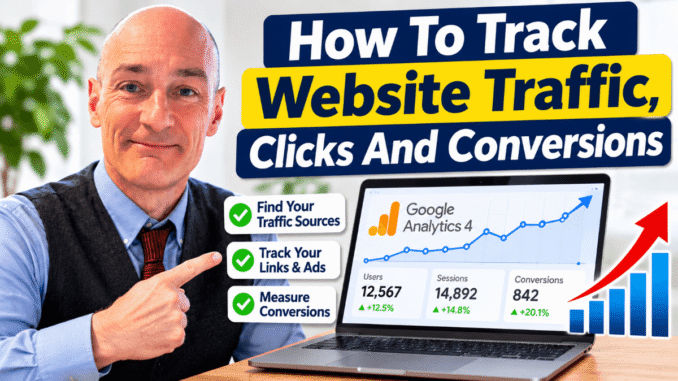
Updated November 2026: This article has been refreshed with updated information on tracking website traffic, measuring advertising campaigns, monitoring affiliate links and understanding conversions. I’ve also included some tools and practical tips to help you make better use of your marketing efforts.
If you’re involved in affiliate marketing, building an online business or promoting your own website, tracking your traffic is one of the most important things you can do.
It’s easy to get caught up in generating visitors, collecting advertising credits and sending promotional emails. But how do you know whether any of that activity is actually producing results?
Are people visiting your website? Which traffic sources are sending them? Are they clicking your links, joining your email list or buying anything?
Without tracking, you’re largely working in the dark.
Fortunately, you don’t need an expensive analytics package or complicated technical setup to start making better marketing decisions.
1. Find Out Where Your Website Traffic Comes From
The first step is understanding where your visitors originate.
Are they coming from Google searches, YouTube videos, social media, email campaigns, traffic exchanges or safelists?
Google Analytics 4 (GA4) is a useful free tool for examining activity on your website. It can help you understand where visitors come from, which pages they view and how they interact with your content.
For example, you might discover that visitors from YouTube spend more time reading your blog than visitors from a traffic exchange. That information could influence where you spend your marketing time.
Google Analytics provides information about activity after visitors arrive, while Google Search Console helps you understand how people discover your website through Google Search, including search impressions, clicks and queries.
These two tools complement each other, although their traffic figures won’t necessarily match exactly.
You don’t need to analyse every statistic available. Start with the information that helps you understand whether your website is attracting the right visitors.
2. Identify Which Traffic Sources Actually Work
Generating traffic is one thing. Generating useful traffic is another.
Suppose you’re promoting an affiliate program through several traffic exchanges, a safelist and a YouTube video.
You might receive hundreds of clicks from one source and only a handful from another. But which source produces the most email subscribers?
That’s a much more useful question.
Try to track individual campaigns rather than simply counting total visitors. Use different tracking links for different traffic sources so you can compare their performance.
This is particularly useful when promoting the same offer through multiple channels.
For example, you could compare traffic from:
- Manual traffic exchanges
- Safelist email campaigns
- YouTube videos
- Blog posts
- Social media promotions
Over time, you’ll develop a better understanding of which sources deserve more attention and which ones aren’t producing worthwhile results.
3. Track Your Links And Advertising Campaigns
Knowing how many visitors arrive at your website is useful, but knowing which advertisements generate those visitors is even better.
This is where dedicated link tracking becomes valuable.
I use LeadsLeap for various aspects of my online marketing, including tracking links and campaigns. Its tracking tools can help you compare promotional efforts and identify which campaigns are generating clicks.
LeadsLeap also offers tools for creating landing pages and managing advertising campaigns, making it particularly relevant to affiliate marketers who want to keep several marketing activities under one roof.
Another option is Traffic Zipper, which I use for traffic generation and marketing. Tracking your results alongside your traffic campaigns can help you make better decisions about how to use your available advertising resources.
The important thing is to avoid relying solely on the traffic statistics provided by the advertising platform itself. Whenever possible, compare those figures with what happens after visitors reach your website.
4. Don’t Forget Email Subscribers And Conversions
A visitor clicking on your website isn’t necessarily a successful marketing outcome.
For affiliate marketers, the real objective might be getting someone to join an email list, click an affiliate link, register for a program or eventually make a purchase.
That’s why tracking conversions matters.
If you’re using a squeeze page, monitor how many visitors actually subscribe. If you’re promoting an affiliate program, pay attention to the number of people who click through to the offer and, where affiliate reporting allows it, how many complete the desired action.
Your autoresponder can also provide useful information about email opens, clicks and subscriber engagement.
These figures help you identify where potential customers are dropping out of the process.
For example, if a landing page receives plenty of traffic but few subscribers, you might need to improve the headline, offer or presentation.
If subscribers join your list but rarely click your emails, perhaps the follow-up messages need attention.
The point isn’t to track everything imaginable. It’s to identify the stages of your marketing process where improvements could make a difference.
Final Thoughts
Website traffic tracking doesn’t have to be complicated.
Start by identifying your main traffic sources, monitoring your most important links and measuring the actions you want visitors to take.
You don’t need to spend hours examining statistics every day, either. A regular review of your results should be enough to help you recognise patterns and identify opportunities.
Ultimately, the objective isn’t simply to generate more traffic. It’s to understand which marketing activities are helping you build your online business.
And once you know that, you can spend more time doing what works and less time wasting effort on campaigns that don’t.
David Hurley
#InspiredFocus